Obesity in Cats: Symptoms, Treatment & Prevention
When it comes to obesity cats symptoms, if you’ve noticed your cat getting a little… rounder, you’re not alone. Obesity in cats happens quietly—one extra scoop here, a few treats there, and suddenly the svelte house panther looks more like a couch loaf. It can feel overwhelming to rethink meals and play, but take a breath: with steady habits and your veterinary team’s guidance, most cats can slim down safely and regain their pep. In the guide below, we’ll walk through obesity in cats: symptoms, treatment & prevention in a practical, judgment-free way—because you and your cat deserve support, not side-eye.
Best Products
| Product | Best For | Why It Helps | Link |
|---|---|---|---|
| Digital Pet Food Scale | Accurate meal portions | Measuring by weight helps keep portions consistent and prevents accidental overfeeding. | Digital Pet Food Scale |
| Slow Feeder Cat Bowl | Fast eaters | Slows down mealtime to support satiety cues and reduce begging. | Slow Feeder Cat Bowl |
| Cat Puzzle Feeder Toy | Food-motivated play | Turns calories into enrichment by making your cat “work” for kibble in a fun, low-stress way. | Cat Puzzle Feeder Toy |
| Stainless Steel Measuring Scoop | Portion consistency | Provides a reliable, easy-to-clean tool for consistent daily feeding. | Stainless Steel Measuring Scoop |
Related Articles You Might Enjoy
What This Issue Is for Obesity Cats Symptoms

Feline obesity is an excess accumulation of body fat that puts strain on a cat’s joints, organs, and metabolism. It isn’t just “a little extra fluff.” Adipose tissue is biologically active—it releases hormones and inflammatory signals that can affect how a cat’s body handles sugar, inflammation, and even appetite. Over time, carrying excess weight can increase the risk of problems like joint discomfort, breathing challenges, urinary concerns, and metabolic conditions. It can also make existing issues, such as arthritis, more uncomfortable because your cat is lugging around more weight on sore joints.
It’s important to remember that weight alone is not the whole story. Vets look at body condition and muscle condition together. A cat can be “overweight” by the scale but still have muscle loss, which influences health risks and how a veterinarian may approach a weight-loss plan. Likewise, some cats have a stockier build, while others are naturally lean. The goal is not a number on a scale—it’s a healthy body composition and a cat who moves, grooms, and plays comfortably.
Healthy weight care should always be individualized. What’s “just right” for one cat isn’t necessarily right for another. That’s why a vet may evaluate your cat’s overall body condition and medical history before recommending any specific changes.
Signs and Symptoms to Watch For Obesity Cats Symptoms
Obesity can creep up so slowly that it becomes your new normal. These signs can help you spot trouble early:
- Ribs that are hard to feel under a layer of fat, or a broad, hard-to-define waist when viewed from above.
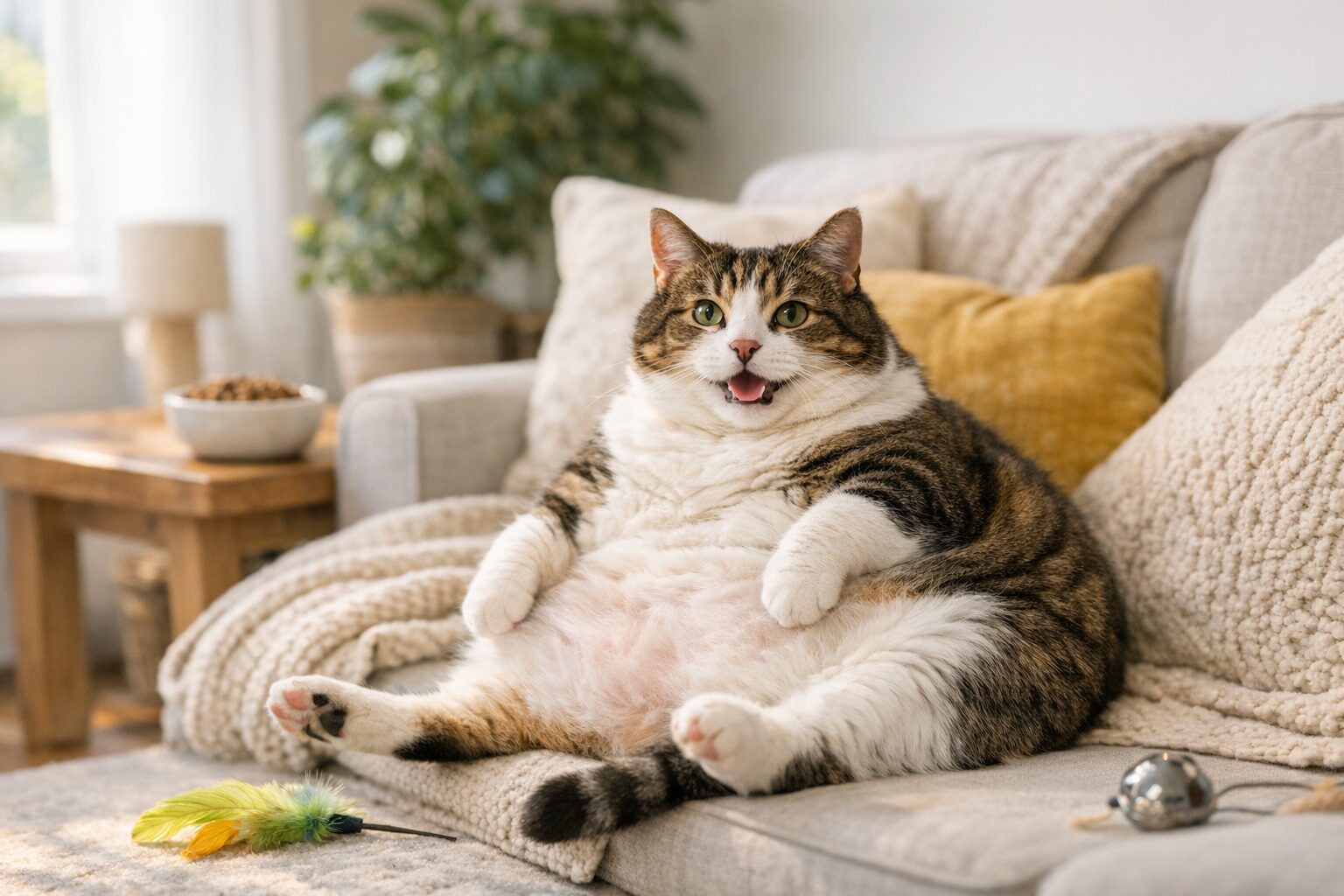
- A noticeable sagging belly (abdominal fat pad) that sways when walking.
- Reduced activity or an “I’ll pass” attitude toward play that used to be fun.
- Difficulty jumping onto favorite perches, windowsills, or beds.
- Trouble grooming hard-to-reach areas, dandruff, or a greasier coat than usual.
- Snoring, louder breathing, or panting after minimal exercise or on warm days.
- Begging, food-seeking, or raiding other pets’ bowls—sometimes learned behavior that compounds weight gain.
- Increased tiredness or rest time, especially paired with weight gain.
Keep in mind that these signs can overlap with other conditions, so it’s wise to have a vet check any new or worsening changes. They may screen for medical issues that can influence weight, comfort, or appetite before suggesting a plan.
Common Causes and Risk Factors for Obesity Cats Symptoms
Most feline weight gain stems from a simple equation: more calories in than calories out. But life with cats is not a math worksheet, and many small things can tip the balance. Common contributors include:
- Free-feeding and calorie-dense foods: Bowls that are topped up “as needed” make it easy for cats to snack all day, especially with energy-rich kibble.
- Portion creep: Scoops and cups vary in size, and “a little extra” can quietly add up over months.
- Treats and table scraps: Tiny bites from your plate may pack surprising calories and can encourage persistent begging.
- Low activity: Indoor cats don’t need to hunt or roam, so their natural calorie burn is lower unless we engineer play and enrichment.
- Age and neuter status: Adult and senior cats often have lower energy needs than kittens. After spay/neuter, a cat’s metabolism may shift, which means portions sometimes need adjusting.
- Pain or mobility issues: Arthritis or injury can make movement less appealing, which reduces daily energy burn.
- Stress and environment: Boredom, resource competition in multi-cat homes, or anxiety can lead to comfort eating or less movement.
- Medical and medication factors: Certain health issues and some medications can affect appetite, water balance, or energy. A vet may screen for these if weight changes are rapid or puzzling.
None of this is about blame. It’s about identifying levers we can nudge—food routine, playtime, and the home setup—to help your cat thrive.
How Vets Diagnose It for Obesity Cats Symptoms
There’s no single test for obesity; instead, veterinarians combine hands-on assessment with a cat’s history. During a checkup, a vet may: Read more: Obesity in Cats: Symptoms, Treatment & Prevention
- Check Body Condition Score (BCS): A hands-on exam of ribs, waist, and belly fat pad. Scores typically range from very underweight to obese.
- Evaluate Muscle Condition Score (MCS): Distinguishes fat from muscle. Some overweight cats still lose muscle (sarcopenia), which changes care priorities.
- Weigh and trend data: A series of weights over time is far more informative than a single number.
- Discuss diet and routine: What, how much, how often, and who feeds—plus treats and any “secret snacks.”
- Run lab work if indicated: Bloodwork or urinalysis may be recommended to screen for conditions that can mimic or complicate weight issues and to set a safe starting point for a weight plan.
From there, your veterinarian may recommend a personalized plan that reflects your cat’s health, lifestyle, and your household routines.
Treatment and Support Options for Obesity Cats Symptoms
Safe feline weight loss is a marathon, not a sprint. Cats should not be fasted or put on crash diets. Rapid calorie cuts can be dangerous, especially for overweight cats, and may contribute to serious liver complications. A veterinarian can help you find a gradual, sustainable path that protects your cat’s health while nudging the scale in the right direction.
- Structured feeding: Your veterinarian may recommend measured meals at set times rather than free-feeding. Small, predictable meals help many cats feel secure and reduce “food-is-coming” anxiety.
- Accurate portions: Measuring by weight using a digital food scale is often more consistent than scoops. If you prefer scoops, choose one and stick to it—“a heaping cup” is not a unit of measure.
- Diet choice: A vet may suggest a weight-management diet designed for satiety and lean muscle support. These formulas often balance protein, fiber, and energy density to help your cat feel fuller on fewer calories.
- Enrichment and play: Movement—no matter how modest—matters. Short play bursts with wand toys, food puzzles, or climbing sessions can add up. Think “lots of tiny hunts” throughout the day.
- Tools that help: Slow feeder bowls, puzzle feeders, and scheduled micro-portions can make meals last longer and tap into natural foraging instincts.
- Treat budgeting: If treats are part of your routine, your vet may recommend counting them within the daily calorie budget. Single-ingredient lean treats or a small portion of the cat’s regular diet used as treats can help.
- Multi-cat strategies: Separate feeding areas, microchip-activated feeders, or feeding cats in different rooms may be needed if one pet is a social snacker.
- Regular check-ins: Weigh-ins and body condition checks every few weeks help your vet fine-tune the plan. Plateaus are normal; adjustments are part of the process.
Obesity in Cats: Symptoms, Treatment & Prevention—What to Keep in Mind for Obesity Cats Symptoms
As you work through a plan, remember the core ideas: watch for signs like decreased activity and difficulty grooming, partner closely with your vet on treatment steps such as measured meals and enrichment, and practice prevention daily with smart portions and play. Progress is measured in steady habits, not dramatic weekly drops.
In select cases—especially when other medical conditions complicate weight care—your veterinarian may discuss additional tools or referrals. The details depend on your cat’s history and lab results, and should be guided by a professional who knows your pet.
Prevention and Daily Care for Obesity Cats Symptoms
Preventing weight gain is gentler than reversing it. The good news? Small, repeatable choices make a big difference. A few cat-nerd favorites:
- Make meals intentional: Use a consistent measuring tool or food scale. Pre-portion meals in labeled containers or baggies for the week to reduce on-the-fly overpours.
- Play like a hunter: Cats are ambush predators built for short bursts. Schedule a few 3–5 minute play sessions daily with a wand toy, ball, or crinkle mouse.
- Forage for food: Introduce a puzzle feeder or hide small portions around safe areas. Start easy and increase the challenge as your cat “gets it.”
- Upgrade the environment: Offer vertical spaces, window perches, and scratching posts to invite movement. Rotating toys keeps things novel.
- Family agreement: Align on treat rules. If your cat has mastered “sad eyes” with one particular human, consider non-food attention like brushing or a short play burst instead.
- Hydration station: Some cats move more and snack less when they have engaging water sources. Multiple bowls or a pet fountain can help.
- Routine vet care: Annual or semi-annual exams help catch weight trends early and adjust plans before pounds pile on.
Consistency wins. If life gets busy, even quick “mini hunts” with a wand toy can keep your cat’s mind and body engaged.
Diet and Nutrition Considerations
Food is fuel—and feel. The right diet helps support a healthy body composition and a happy cat experience at mealtime. Consider these points and ask your vet what fits your cat best:
- Energy density matters: Some foods pack more calories per cup than others. Two cats eating “one cup” may consume very different calories depending on the brand and formula.
- Protein for lean muscle: Adequate, high-quality protein helps maintain muscle during weight loss. Your veterinarian may recommend a diet formulated for satiety and muscle support.
- Fiber and satiety: Certain weight-management diets use fiber types and textures to help cats feel fuller between meals.
- Wet vs. dry: Moisture-rich wet foods can support hydration and often feel more filling to some cats. Others do well on carefully measured dry or a combo plan. Your vet can help balance cost, preferences, and health goals.
- Treat choices: Consider using a portion of the regular diet as treats or select lower-calorie options. Keep them part of the total daily intake.
- Switching foods: Any change should be gradual. A slow transition helps avoid digestive upset and increases acceptance.
- Special cases: Homemade or raw feeding requires careful formulation; your veterinarian may recommend working with a board-certified veterinary nutritionist if you’re exploring those routes.
There is no one “perfect” diet for every cat. The winning plan is the one your cat will eat reliably, that supports a healthy body condition, and that you can manage day in and day out.
When to Call a Vet Right Away
Some situations need prompt attention, especially in overweight cats. Contact a veterinarian immediately if you notice:
- Not eating for 24 hours or more: Cats who stop eating can develop serious liver complications; this risk is higher for overweight cats.
- Repeated vomiting, severe diarrhea, or sudden lethargy: These can dehydrate a cat quickly and may indicate an urgent problem.
- Labored breathing or open-mouth panting at rest: Breathing issues are an emergency.
- Collapse, extreme weakness, or unresponsiveness: Requires immediate care.
- Straining to urinate or inability to pass urine: Especially in male cats, this can be a life-threatening emergency.
- Yellow-tinged gums, skin, or eyes (jaundice): Needs urgent evaluation.
If you’re unsure, call a veterinary clinic or emergency hospital for guidance. It’s always appropriate to ask for help early.
FAQ
How can I tell if my cat is overweight without guessing?
Run your hands along your cat’s sides. You should be able to feel ribs with a light touch under a thin layer of fat, and see a visible waist from above. If ribs are hard to find and the waist is round or absent, a vet may evaluate your cat’s body condition score and confirm next steps.
Is it okay to put my cat on a diet by myself?
It’s safer to partner with a veterinarian. Cats do best with gradual changes and steady monitoring. Your veterinarian may recommend a specific diet, portion plan, and recheck schedule to keep things safe and effective.
What if my cat begs all the time?
Begging often improves with predictable routines and enrichment. Try scheduled meals, slow feeders, and short play bursts before and after feeding. If the habit persists, your veterinarian may recommend behavior tweaks or a diet designed to help with satiety.
Can indoor-only cats be a healthy weight?
Absolutely. Indoor cats just need us to supply the “hunt.” Puzzle feeders, climbing areas, and daily play create the movement they’re missing from outdoor life. Small, consistent changes make the biggest difference.
Is wet food better for weight loss than dry?
Both can be part of a healthy plan. Some cats feel more satisfied with moisture-rich wet food; others do well on measured dry or a combo. Your veterinarian may recommend an approach based on your cat’s preferences, dental status, and health goals.
How fast should my cat lose weight?
Very gradually. A vet may set a safe weekly rate and adjust portions or diet as needed. Rapid weight loss can be risky for cats, so slow and steady wins the race.
What if I have multiple cats with different needs?
Feed in separate spaces, close doors for mealtimes, or use microchip-activated feeders so each cat gets the right portion. A veterinarian can help you tailor a household strategy that reduces stress and food theft.
Helping a cat get back to a healthy weight is one of the kindest long-term gifts we can give. By watching for early signs, working with your vet on smart treatment steps, and building small daily habits, you’ll set your whiskered friend up for years of better comfort, mobility, and play. Obesity in cats: symptoms, treatment & prevention may sound like a big topic, but in real life it’s a series of manageable tweaks—meal by meal, play session by play session—guided by a calm plan and lots of encouragement.