Best Cat Tree for Cats in 2026
When it comes to cat tree cats, if your cat is currently using your bookshelf, curtains, or shoulders as a climbing gym, it’s time for a dedicated vertical playground. The best cat tree for cats in 2026 balances stability, smart materials, and genuinely cat-pleasing features—without swallowing your living room. We researched the designs pet parents keep buying again and again, from compact modern towers to old-school carpet condos that can take a beating. Below, our top picks span different budgets, aesthetics, and cat personalities, so you can give your feline a safe, sturdy place to scratch, nap, and supervise their kingdom from above.
- — A classic mega-tower dripping with perches, condos, and sisal for the price-focused multi-cat household.
- — Heavy, sturdy, and carpeted with real wood under the hood to keep big kitties confident aloft.
- — A slim, stylish climber with a tiny footprint and durable scratching zones.
- — Modular shelves and hammocks that turn your wall into an indoor hiking trail.
- — A “houseplant” cat tree for shy or playful kitties who love peeking through foliage.
 Related Articles You Might Enjoy
best cat tree for Cats in 2026: Reviews for Cat Tree Cats
Catit Vesper V-High Base (Best Overall) for Cat Tree Cats
The Vesper V-High Base remains a go-to because it marries feline function with furniture-grade style. With tall sisal-wrapped posts, two platforms, and a cozy cube accented by removable cushions, it feels like a modern side piece rather than pet gear. The veneer panels wipe clean, the pads attach with hook-and-loop fasteners for quick laundering, and the layout suits both people-watchers and window sitters.
- Pros
- Stable, heavy base and tall sisal posts for full-body stretches
- Removable, washable pads; easy-wipe wood surfaces
- Clean, modern look that fits adult spaces
- Drawbacks
- Veneer can show scratches more than carpet if your cat is intense
- Cushions are on the thinner side; some cats prefer plusher pads
- Best for medium to large cats who love high perching and vertical scratching; style-conscious homes.
- Who should skip it if you want thick carpeted surfaces or ultra-plush lounging spots.
Recommendation: Catit Vesper V-High Base
Frisco 72-in Faux Fur Cat Tree & Condo (Best Budget) for Cat Tree Cats
When you need maximum features per dollar, the Frisco 72-in tower is hard to beat. It’s a classic “everything at once” build: multiple condos, a handful of platforms, sisal-wrapped posts, and plenty of vertical real estate for zoomies. It’s not furniture-grade, but for busy multi-cat households or first-time cat tree buyers, it delivers a lot of entertainment and scratchable surface area without the premium price tag.
- Pros
- Tons of perches and hideaways for multi-cat peacekeeping
- Ample sisal posts that help redirect scratching
- Great value relative to size and features
- Drawbacks
- Lighter construction; can wobble if not assembled and placed carefully
- Faux fur fabric isn’t as durable or easy to clean as wood or carpet
- Best for budget-conscious homes that want a big playground fast.
- Who should skip it if you need ultra-stability for very large cats or prefer sleek, modern aesthetics.
Recommendation: Frisco 72-in Faux Fur Cat Tree & Condo
New Cat Condos Premier Large Play Cat Tree (Best for Large Cats) for Cat Tree Cats
Big cats want to climb, too, but many towers feel shaky under a 15–20 lb frame. The Premier Large Play Cat Tree leans into sturdiness with a heavier, more traditional build—think solid wood posts under real carpet. It’s not dainty, and it’s not the cheapest, but the heft and thicker posts give larger breeds the confidence to spring and sprawl without the wobbles.
- Pros
- Heavy, sturdy construction built around real wood
- Carpeted surfaces offer traction and warmth
- Roomy perches that don’t feel cramped for big kitties
- Drawbacks
- Bulky and heavy; not handy to move or rearrange
- Carpet can retain fur and requires deeper cleaning
- Best for large breeds (Maine Coon, Ragdoll, Norwegian Forest Cat) or athletic cats who launch hard.
- Who should skip it if you need a light, minimal, or easily portable tower.
Recommendation: New Cat Condos Premier Large Play Cat Tree
PetFusion Modern Cat Tree & Tower (Tall) (Best for Small Spaces) for Cat Tree Cats
Short on square footage? PetFusion’s tall tower uses a slim footprint and smart platform placement to offer real climbing without hogging the room. The wood-forward design looks modern, and the integrated scratch zones are built to take a beating. Anchoring hardware or a wall-leaning setup helps it feel secure, even when cats take the express route to the top.
- Pros
- Minimal footprint with true vertical access to height
- Contemporary styling with durable scratching panels
- Good stability when properly anchored or positioned
- Drawbacks
- Narrow platforms may be tight for very large cats
- Assembly requires attention to detail for best stability
- Best for apartment dwellers or anyone wanting height without a wide base.
- Who should skip it if your cats prefer sprawling, plush lounges over nimble climbs.
Recommendation: PetFusion Modern Cat Tree & Tower (Tall)
CatastrophiCreations Cat Mod Climb Track Set (Best Wall-Mounted System) for Cat Tree Cats
If your cat treats vertical space like a sport, a wall-mounted system is the endgame. CatastrophiCreations’ modular shelves, bridges, and hammocks let you tailor a route across studs, giving shy cats strategic retreats and athletes a full obstacle course. Fabric components remove for washing, and you can expand the layout over time as your cat’s confidence grows.
- Pros
- Highly modular: build routes to suit your walls and cats
- Sturdier than it looks when mounted into studs
- Washable fabric pieces reduce lingering fur and odors
- Drawbacks
- Requires stud-finding, tools, and careful installation
- Costs add up as you expand or upgrade components
- Best for energetic climbers, multi-cat diplomacy, and enriching small homes by going vertical.
- Who should skip it renters who can’t patch multiple holes or anyone avoiding wall installs.
Recommendation: CatastrophiCreations Cat Mod Climb Track Set
On2 Pets Cat Tree with Leaves (Large) (Best Natural-Look) for Cat Tree Cats
Part hideout, part jungle gym, this leafy tower blends into greenery-forward homes and gives timid cats partial cover while they survey. The platforms are staggered to encourage upward movement, while the faux foliage adds enrichment (and cute photo ops). It’s lighter than traditional carpeted beasts, so placement against a wall or corner helps keep everything feeling solid.
- Pros
- Camouflaged, natural-inspired look that cats enjoy peeking through
- Multiple tiers for climbing and lounging
- Lighter and easier to move than heavy carpet trees
- Drawbacks
- Lighter construction; not ideal for very large or rowdy cats
- Leaves can collect dust and need periodic cleaning
- Best for shy cats who like covered perches and households that want a softer, decor-friendly silhouette.
- Who should skip it if you want bombproof stability for heavy jumpers.
Recommendation: On2 Pets Cat Tree with Leaves (Large)
How to Choose the Right Cat Tree
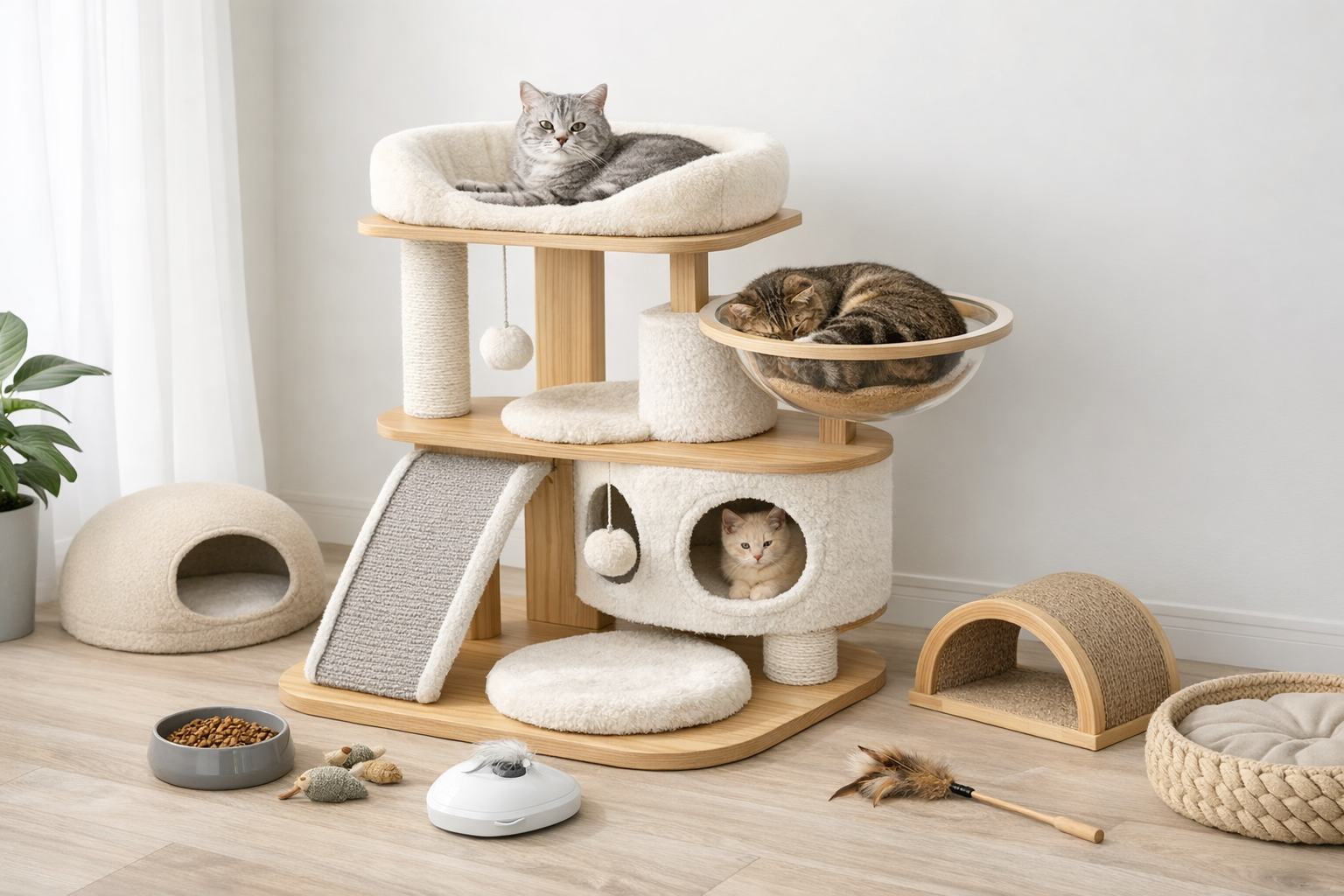
The right tree turns your home’s “no-go” surfaces into cat-approved climbing lanes. Use these criteria to zero in on the right fit.
- Stability first. Look for a broad, heavy base, thick posts, and hardware that secures tightly. For tall towers, consider wall anchors or corner placement. If you share space with a Maine Coon or an aerialist, prioritize heavier builds (solid wood or reinforced frames) over lightweight fiberboard.
- Height and layout. Some cats want the penthouse; others prefer mid-level ledges. Multi-level designs with staggered platforms suit seniors and kittens better than single big jumps. For multi-cat homes, provide at least two routes up and down to reduce traffic jams.
- Scratching surfaces. Sisal-wrapped posts are the all-around favorite for vertical scratching. Sisal fabric sheets are quieter and wear evenly; sisal rope is more textured and grippy. Carpet can work but sometimes encourages scratching carpeted floors—set expectations early.
- Materials and cleaning. Carpet and faux fur are cozy but hold fur. Wood or veneer wipes clean and looks modern but can show nicks. Removable, washable pads and hammocks are a time-saver. In 2026, more “furniture-style” trees combine wood with machine-washable cushions—a smart balance.
- Platform size. Measure your cat’s “loaf” and sprawl habits. Large cats need deeper, wider perches; hammocks should list a weight limit. Condos with small entrances may frustrate bigger faces and longer bodies.
- Footprint vs. ceiling height. Tight on floor space? Choose tall, slim towers or wall-mounted sets. High ceilings invite taller trees, but only if they’re anchored.
- Your home’s style. There’s no wrong choice if your cat uses it, but the best cat tree is one you’ll proudly keep in a prime location (near windows or favorite rooms). If it looks good, it won’t get banished to the basement.
- Assembly and hardware. Pre-drilled holes, clear instructions, and included tools matter. For wall systems, verify stud spacing compatibility before you order.
Common Mistakes to Avoid
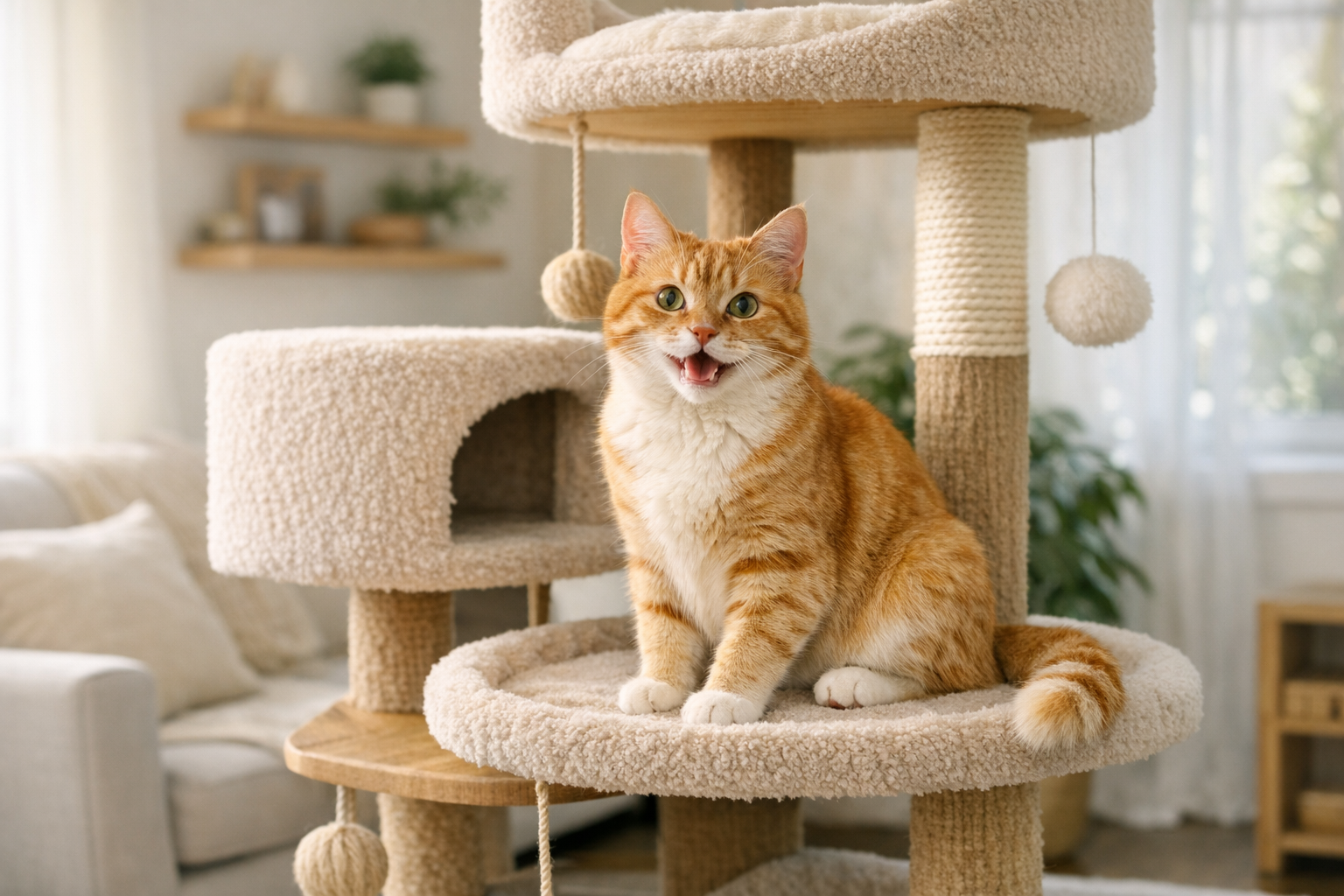
- Buying too small or too flimsy. If your cat feels wobbles on the first leap, they’ll abandon the tower—and maybe head back to your sofa arms.
- Ignoring the scratch preference. If your cat loves horizontal scratching, add a ramp or flat board. If they stretch tall, make sure there’s a full-height sisal post.
- Skimping on location. Stick the tree in a social, view-rich spot (window, near your desk). Hidden trees get ignored.
- Forgetting multiple routes. In multi-cat homes, provide at least two ways up and down to prevent bullying or stalemates.
- Underestimating cleaning. Removable pads and wipeable surfaces make a huge difference week to week.
- Skipping anchoring hardware. If the manufacturer includes a wall tether for tall units, use it. If not, corner placement or anti-tip straps are still smart.
FAQ
What size cat tree should I get for my cat?
Match the tree to your cat’s size and agility. For kittens and seniors, choose a mid-height tree (3–4 feet) with staggered steps. For athletic or large adults, 5–6 feet with wide, deep perches and thick posts is ideal. If you have multiple cats, err larger with multiple routes to reduce crowding.
Is carpet or sisal better for scratching?
Most cats prefer sisal for vertical scratching because it’s grippy and satisfying. Sisal fabric tends to wear more evenly and quietly than rope; rope provides more texture. Carpet works for some cats, but can blur the line between “okay to scratch” and “not okay” if you have carpeted floors.
How do I make a cat tree more stable?
Place it on a flat surface, push the base flush against a wall or into a corner, and tighten all hardware. Add anti-tip straps or wall anchors on taller units. Heavier bases, thicker posts, and lower center-of-gravity condos also help. If wobble persists, consider a shorter or heavier-duty model.
Where should I put a cat tree?
High-traffic, high-interest zones win: by a window with bird TV, near your couch, or in your home office. Avoid isolating the tree in a back room—cats prefer to lounge where the action is. If your cat enjoys quiet, carve out a second, calmer perch elsewhere.
Can big cats use “regular” trees?
Sometimes, but watch for narrow perches, thin posts, and wobbly frames. Big cats thrive on heavy builds (solid wood, reinforced platforms), wider perches, and taller posts for full-body stretches. If your cat hesitates to jump or the tower sways, upgrade to a heavy-duty option.
How long should a cat tree last?
With regular use, budget towers might last 1–3 years; mid-range furniture-style trees can go 3–5+ years; robust, carpeted wood builds can exceed that. Lifespan depends on your cat’s intensity and whether you replace worn pads or posts as needed.
Do I need more than one cat tree for multiple cats?
It helps. One large tree with multiple routes can work, but adding a second tower, wall shelves, or a window perch reduces turf wars and gives cats options at different heights and rooms.
Final Verdict
If you want the safest bet for most homes, the Catit Vesper V-High Base balances stability, clean looks, and genuinely cat-pleasing design. Budget-focused multi-cat families should consider the Frisco 72-in for maximum vertical mileage, while big cats deserve the heavy-duty New Cat Condos build. Space-conscious pet parents will appreciate the PetFusion tower, and adventurous climbers shine with a CatastrophiCreations wall route. Any of these choices can be the best cat tree for cats in 2026—just match the build to your cat’s size, your floor plan, and their preferred scratching style, then place it right where your feline wants to be.
Quick picks to shop: Catit Vesper V-High Base, Frisco 72-in Faux Fur Cat Tree & Condo, New Cat Condos Premier Large Play Cat Tree
Happy climbing—and may your sofa arms stay scratch-free.
Similar Posts
Best Cat Litter for Cats in 2026
Cat litter cats: Our 2026 guide to the best cat litter for cats compares clay, silica, and natural options—low dust, strong clumping, less tracking.
Best Automatic Feeder for Cats in 2026
Automatic feeder cats: Looking for the best automatic feeder for cats in 2026? Our polished, practical guide compares 6 top feeders—dry and wet
Best Water Fountain for Cats in 2026
Water fountain cats: Looking for the best water fountain for cats in 2026? We compare top models—plastic, stainless, ceramic, and cordless—covering
Best Cat Toys for Cats in 2026
Cat toys cats: From feather wands to puzzle feeders, discover the best cat toys for cats in 2026. Safe, durable, and boredom-busting picks—plus a