Best Cat Litter for Cats in 2026
When it comes to cat litter cats, if your cat treats the litter box like a sandbox, your nose (and floors) know it. The right litter can turn that daily chore from “ugh” to “done”—less dust, tighter clumps, fewer smells, and a happier cat. In 2026, the market is stacked with smarter clumping clays, gentler plant-based blends, and even color-changing crystals. Below, we break down the best cat litter for cats in 2026 by what actually matters: odor control, dust, tracking, texture, and value. Whether you live with a scent-sensitive senior, a boisterous multi-cat crew, or a kitten still figuring out the box, there’s a formula here that just works.

Related Articles You Might Enjoy
The Best Cat Litters of 2026 for Cat Litter Cats

Dr. Elsey’s Ultra Clumping Clay for Cat Litter Cats
A longtime favorite among clay litters, Dr. Elsey’s Ultra is unscented, low-dust, and forms reliably hard clumps that make scooping quick. The granules are heavier than many budget clays, which helps reduce tracking without sacrificing clump integrity. If you want a straightforward, no-frills litter that controls odors well in covered or open boxes, this is a dependable pick.
- Pros: Tight clumps; genuinely low dust for a clay; unscented; solid odor control; good value in large bags.
- Drawbacks: Heavier bag; clay isn’t biodegradable; clumps can adhere to bare pans if you keep litter depth too shallow.
Best for: Multi-cat homes and anyone who prefers an unscented, hard-clumping clay that doesn’t track excessively.
Skip if: You want a biodegradable or flushable option, or you prefer a perfumed scent.
How it compares: Versus budget clays, Dr. Elsey’s typically beats them on dust and clump strength. Compared with premium odor-focused clays, it’s less perfumed and more neutral.
Recommended retailer: Dr. Elsey’s Ultra Clumping Clay
World’s Best Cat Litter Multiple Cat Unscented for Cat Litter Cats
This corn-based litter clumps quickly and controls odor surprisingly well for a plant-based formula. It’s lightweight, biodegradable, and many households appreciate that it’s naturally scented (i.e., no perfumes). If you need an easier-to-carry bag with quicker scoops and less landfill guilt than clay, this is a standout.
- Pros: Fast clumping; lighter than clay; effective odor control; plant-based and biodegradable; easy to scoop.
- Drawbacks: Can track more than heavy clays; occasional dusty batches; flushability claims vary by municipality—when in doubt, don’t flush.
Best for: Owners seeking a natural, lighter litter that still clumps well, including small apartments where frequent scooping matters.
Skip if: You want minimal tracking at all costs or have a cat that tends to sample edible-smelling substrates (rare, but it happens).
How it compares: It’s less dusty and lighter than many clays, with better clumping than most wheat or paper litters. Odor control is strong for a natural pick but not as “sealed” as heavy-duty scented clays.
Recommended retailer: World’s Best Cat Litter Multiple Cat Unscented
Arm & Hammer Clump & Seal Multi-Cat for Cat Litter Cats
When you need to shut down odors fast, Arm & Hammer’s Clump & Seal line is built to lock in smells with baking soda and moisture-activated particles. The clumps are dense and scoopable, and dust is typically well-controlled for a performance clay. Note: this one is fragranced—pleasant to some, too much for others—so consider your cat’s scent tolerance.
- Pros: Excellent odor control; firm clumps; relatively low dust; good for high-traffic boxes.
- Drawbacks: Perfumed scent may bother scent-sensitive cats or humans; heavier than natural litters; fragrance can linger.
Best for: Multi-cat households prioritizing strong odor suppression, especially in smaller spaces or warm climates.
Skip if: You (or your cat) are fragrance-averse or you prefer a biodegradable formula.
How it compares: More aggressive on odor than most unscented clays. Compared with Dr. Elsey’s Ultra, this wins on deodorizing but loses if you must avoid fragrances.
Recommended retailer: Arm & Hammer Clump & Seal Multi-Cat
Tidy Cats Free & Clean Unscented (Clumping Clay) for Cat Litter Cats
Tidy Cats Free & Clean ditches perfumes in favor of activated charcoal to neutralize odors. It’s wallet-friendly, readily available, and widely liked by cats who dislike scented litters. While the clumps can be a touch softer than premium picks, it holds up well with daily scooping and a proper litter depth.
- Pros: Unscented with charcoal; affordable; easy to find; decent dust control; cat-friendly texture.
- Drawbacks: Clumps can break if you rush scooping; can track more than heavier clays; odor control is steady but not “industrial strength.”
Best for: Budget-minded households that want an unscented clay without sacrificing daily usability.
Skip if: You require ultra-hard clumps or you’re extremely sensitive to minor tracking.
How it compares: Cheaper than many premium clays and less perfumed than heavy-duty odor-fighters. Dr. Elsey’s typically clumps harder; Arm & Hammer often controls odor more aggressively.
Recommended retailer: Tidy Cats Free & Clean Unscented
PrettyLitter Health Monitoring Crystals for Cat Litter Cats
PrettyLitter uses silica gel crystals that change color in response to urine pH variations, which may help you notice changes worth discussing with your vet. The litter is lightweight, low-dust, and non-clumping—you stir daily to distribute moisture. Most single-cat homes report a bag lasting about a month, though high usage or humidity may shorten that.
- Pros: Color cues can prompt timely vet check-ins; excellent low dust; lightweight; solid odor absorption when maintained.
- Drawbacks: Not clumping; performance dips in very high-traffic boxes; some cats dislike the crystal texture; ongoing subscription cost can add up.
Best for: Single-cat homes, people who want an early heads-up on potential urinary changes, and anyone prioritizing low dust.
Skip if: You need heavy-duty multi-cat odor control from a single pan, or your cat prefers soft, fine clays.
How it compares: Versus clays, it’s lighter and cleaner to pour, but scooping is different—you remove solids and stir rather than removing urine clumps. Color change is informational, not a diagnosis.
Recommended retailer: PrettyLitter Health Monitoring Crystals
ökocat Super Soft Clumping Wood for Cat Litter Cats
ökocat’s Super Soft formula is a fine-textured, wood-based litter designed to be gentle on tender paws while still clumping. Made from reclaimed wood fiber, it’s biodegradable and naturally helps suppress ammonia. Expect lighter bags, a mild wood scent, and some tracking—typical for plant-based fines—offset by easy scooping.
- Pros: Gentle texture for kittens or sensitive paws; plant-based and biodegradable; good ammonia control; lighter to carry.
- Drawbacks: More tracking than heavy clays; can be slightly dusty on first pour; not ideal for heavy diggers without a high-sided box.
Best for: Kittens transitioning to clumping litter, declawed cats, and owners seeking a softer, eco-leaning option.
Skip if: You want near-zero tracking or need maximum clump hardness for long scoop intervals.
How it compares: Softer underpaw than corn and lighter than clay. Odor control is naturally good, though scented clays still dominate on sheer odor suppression.
Recommended retailer: ökocat Super Soft Clumping Wood
Boxiecat Extra Strength Clumping Clay
Boxiecat is known for firm, cohesive clumps that often form near the surface for easier scooping. The Extra Strength variant targets odors common in high-protein diets and multi-cat homes while maintaining low dust and a smooth, fine granule cats tend to accept quickly. It’s unscented, which makes its odor control all the more impressive when maintained daily.
- Pros: Hard, scoopable clumps; low dust; unscented with strong odor control; tends to track less than many fine clays.
- Drawbacks: Pricier than basic clays; bags are heavy; like most bentonite, not biodegradable.
Best for: Multi-cat households that want unscented performance without perfume, and fastidious scoopers who value clean, cohesive clumps.
Skip if: Budget is paramount or you want a plant-based option.
How it compares: Sturdier clumps than many budget clays and competitive with premium odor-control formulas—minus the fragrance.
Recommended retailer: Boxiecat Extra Strength Clumping Clay
How to Choose the Right Cat Litter
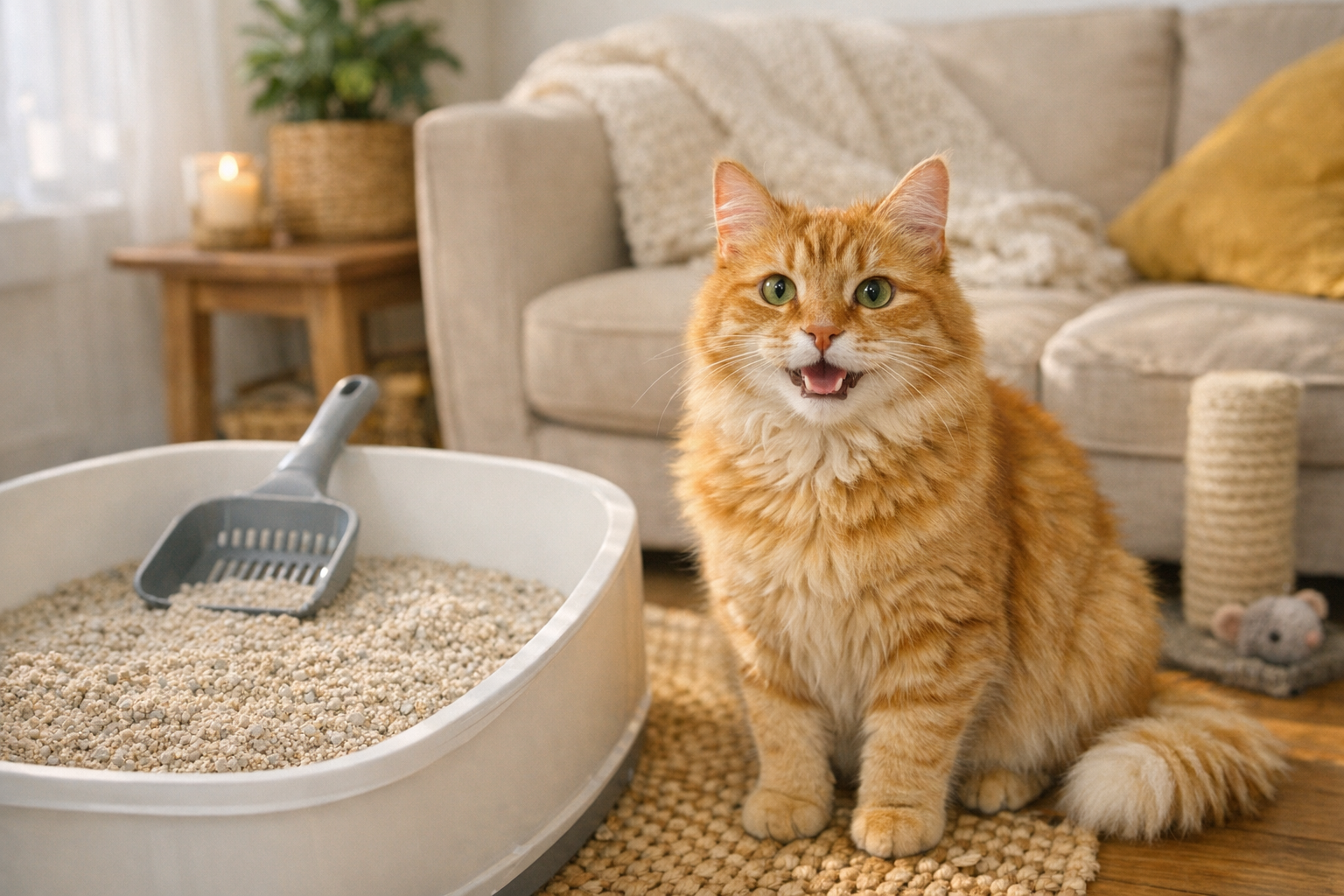
Choosing litter isn’t one-size-fits-all. Your cat’s texture preferences, your home’s ventilation, and your cleaning routine should drive the decision. Start by prioritizing three things: clumping type, dust level, and scent policy. From there, compare weight, tracking, disposal, and cost per month.
- Clumping vs. Non-Clumping: Clumping clay (bentonite) and many plant-based blends form scoopable clumps that make daily maintenance easier. Non-clumping litters (some crystals, paper, and classic clay) absorb moisture but rely on full pan changes. Clumping works best for most multi-cat homes; non-clumping can be fine for single-cat setups with diligent stirring and regular changes (e.g., silica crystals such as PrettyLitter Health Monitoring Crystals).
- Material Matters:
- Clay (bentonite): The clumping benchmark—excellent scoop-ability and odor control; usually heavier and not biodegradable. Examples include Dr. Elsey’s Ultra Clumping Clay and Boxiecat Extra Strength Clumping Clay.
- Silica gel crystals: Lightweight, low dust, strong odor absorption; typically non-clumping; texture can be hit-or-miss with picky cats.
- Plant-based (corn, wheat, wood, tofu/pea fiber): Lighter and biodegradable, often with quick clumping; can track more due to lighter granules.
- Paper/other: Soft and gentle, usually non-clumping; better for medical recoveries but higher-maintenance day-to-day.
- Dust and Air Quality: If your cat (or you) is sneezy, prioritize low-dust formulas. Pour gently and store bags in a dry area. Even low-dust clays can kick up particles if you dump quickly from a height.
- Scented vs. Unscented: Many cats prefer unscented. If you choose fragrances, keep it light; strong perfumes can deter box use. Unscented litters with charcoal or baking soda often keep odors quiet without masking scents.
- Tracking and Granule Size: Heavier granules (many clays) track less; fine, lightweight particles (some plant-based formulas) can hitch rides on paws. High-sided or top-entry boxes and litter mats help, but litter choice is the main lever.
- Weight and Storage: Lightweight litters are kinder on backs and apartment stairs. Heavier clays are stable but bulky. Consider how often you’re comfortable shopping and lugging bags.
- Disposal and Local Rules: “Flushable” claims exist, but many regions advise against flushing pet waste due to plumbing and environmental concerns. Check local guidance. When uncertain, bag and trash.
- Cost Per Month: Price per pound tells only part of the story. Fast-clumping litters that scoop cleanly may last longer. Crystal litters are sold per month per cat; multi-cat homes may need extra bags.
- Cat Preference Comes First: When switching, blend old and new over 5–7 days (up to 2 weeks for very picky cats). If accidents spike during a switch, revert and try a different texture.
Common Mistakes to Avoid
- Switching overnight: Sudden changes can spark litter box avoidance. Mix new with old gradually.
- Shallow pans: Less than 2.5–3 inches encourages clumps to cement to the base. Keep a generous depth for clean scoops.
- Perfume overload: Strongly scented litters can deter cats. If in doubt, go unscented and manage odor with regular scoops.
- Ignoring dust: Dusty litters can irritate airways. Look for low-dust labels and pour gently.
- Under-scooping: Daily scoops (twice daily for multi-cat) prevent odor build-up and tracking of waste particles.
- Flushing where prohibited: Local rules often disallow flushing pet waste. When unsure, bag and bin.
- Poor storage: Keep bags sealed and dry to prevent clumping in-bag or attracting pests, especially with plant-based litters.
FAQ

How often should I scoop and replace litter?
Scoop solids and urine clumps daily (twice daily in multi-cat homes). Top off as needed to maintain 2.5–3 inches of depth. For clumping clay or plant-based clumps, fully replace and wash the pan every 3–4 weeks. For non-clumping crystals, follow the bag’s guidance—often monthly for one cat, sooner if usage is heavy.
Is clumping or non-clumping better for most cats?
Most households prefer clumping litter because it simplifies daily maintenance and keeps boxes fresher. Non-clumping crystals can work well for single-cat homes if you stir daily and replace on schedule. Extremely scent-sensitive cats may like unscented clumping clay or soft plant-based clumps.
Can I flush “flushable” litter?
Many municipalities and septic systems advise against flushing any pet waste. Even if a litter is marketed as flushable, local rules may prohibit it due to plumbing and environmental concerns (including pathogens). When in doubt, bag and dispose in the trash.
How do I reduce tracking?
Pick a heavier granule (many clays or denser plant blends), keep 2.5–3 inches of litter depth, and add a good litter mat. High-sided or top-entry boxes help with enthusiastic diggers. Daily scooping also cuts down on sticky material hitching rides on paws.
Which litter works best for kittens?
Start with unscented, gentle-texture litter. Many owners choose a soft, fine clumping formula like ökocat Super Soft once the kitten reliably uses the box. Avoid strongly perfumed litters. If your vet prefers non-clumping early on, switch to clumping gradually as your kitten matures.
Are silica gel crystal litters safe?
Silica gel crystals are widely used and generally considered safe when used as directed. Always provide good ventilation, scoop solids daily, and avoid letting any litter become oversaturated. If your cat shows aversion or irritation, switch back to a familiar texture.
Why does my litter clump to the pan?
Usually it’s a depth issue. Keep at least 2.5–3 inches in the box so urine doesn’t hit bare plastic. Non-stick liners or pans can help, and slower, careful scooping preserves clump integrity. Some formulas also benefit from a quick stir after scooping to level the surface.
Final Verdict
If you want a set-it-and-scoop-it classic, Dr. Elsey’s Ultra is our reliable, unscented go-to for tight clumps and steady odor control. For a natural route with quick clumps, World’s Best Cat Litter Multiple Cat Unscented is a strong plant-based alternative. If odor wars top your list, Arm & Hammer Clump & Seal Multi-Cat brings serious deodorizing power—just note the fragrance. For gentle paws, ökocat Super Soft is a standout, and for low-dust health cues in single-cat homes, PrettyLitter’s crystals are uniquely informative.
The best cat litter for cats in 2026 is the one your cat loves and you don’t smell. Start with texture and dust, keep the pan deep and scooped, and don’t be afraid to test a small bag before you commit. Your cat’s vote is the only one that counts—and your nose will confirm it.
Similar Posts
Best Water Fountain for Cats in 2026
Water fountain cats: Looking for the best water fountain for cats in 2026? We compare top models—plastic, stainless, ceramic, and cordless—covering
Best Cat Tree for Cats in 2026
Cat tree cats: Looking for the best cat tree for cats in 2026? Our expert roundup covers stable, stylish towers for every budget and space—plus a smart
Best Cat Toys for Cats in 2026
Cat toys cats: From feather wands to puzzle feeders, discover the best cat toys for cats in 2026. Safe, durable, and boredom-busting picks—plus a
Best Automatic Feeder for Cats in 2026
Automatic feeder cats: Looking for the best automatic feeder for cats in 2026? Our polished, practical guide compares 6 top feeders—dry and wet