
Best Reptile Heat Lamps in 2026
Reptile heat lamps are the warm little suns that make captive habitats actually work. Without the right heat source, your lizard can’t digest, your snake won’t thermoregulate, and your turtle will act like a cold rock. The best reptile heat lamps in 2026 aren’t gadgets you buy and forget—they’re a carefully chosen part of a temperature gradient, light cycle, and basking design that supports your reptile’s daily rhythms. In other words: the lamp is not just a bulb, it’s the heartbeat of the habitat. This guide treats heat lamps like a “breed,” breaking down their quirks and care so you can match the right lamp to the right animal and enclosure.
Quick Facts
- What they do: Heat lamps provide a basking hot spot and help create a warm-to-cool temperature gradient so ectotherms can self-regulate body temperature.
- Main types: Halogen basking floods, ceramic heat emitters (CHE), deep heat projectors (DHP), and mercury vapor bulbs (MVB, heat + UVB combo; use with caution).
- Best for: Diurnal species that bask (e.g., bearded dragons, uromastyx, many tortoises). Nocturnal species often need heat without light at night (CHE/DHP/heat mats controlled by thermostat).
- Basking temps (typical): Bearded dragon 100–110°F (38–43°C); blue-tongued skink 95–100°F (35–38°C); ball python hot spot 88–92°F (31–33°C); leopard gecko warm side 88–90°F (31–32°C); crested gecko 78–82°F (25–28°C) max.
- Beam style matters: Flood beams spread heat more naturally; narrow “spot” beams can overheat small areas and risk burns.
- Mounting distance: Start higher than you think, measure surface temps, and lower gradually. Always protect animals from direct contact with bulbs.
- Fixtures: Use ceramic-socket domes/fixtures rated above your bulb’s wattage. Avoid plastic sockets.
- Control: Dimmers and thermostats are essential for dialing in safe, stable temperatures (especially at night).
- Night lighting: No colored “night glow” bulbs. Darkness is part of a healthy circadian rhythm; use heat without visible light if nighttime warmth is required.
- Bulb lifespan: Halogens often last 3–9 months with daily cycling; CHE and DHP can last longer. Replace at first sign of dimming/flicker/cracks.
- Safety: Use lamp guards, secure stands, and cable management. Keep flammables away. Test equipment before introducing animals.
Related Articles You Might Enjoy
History and background for Reptile Heat Lamps
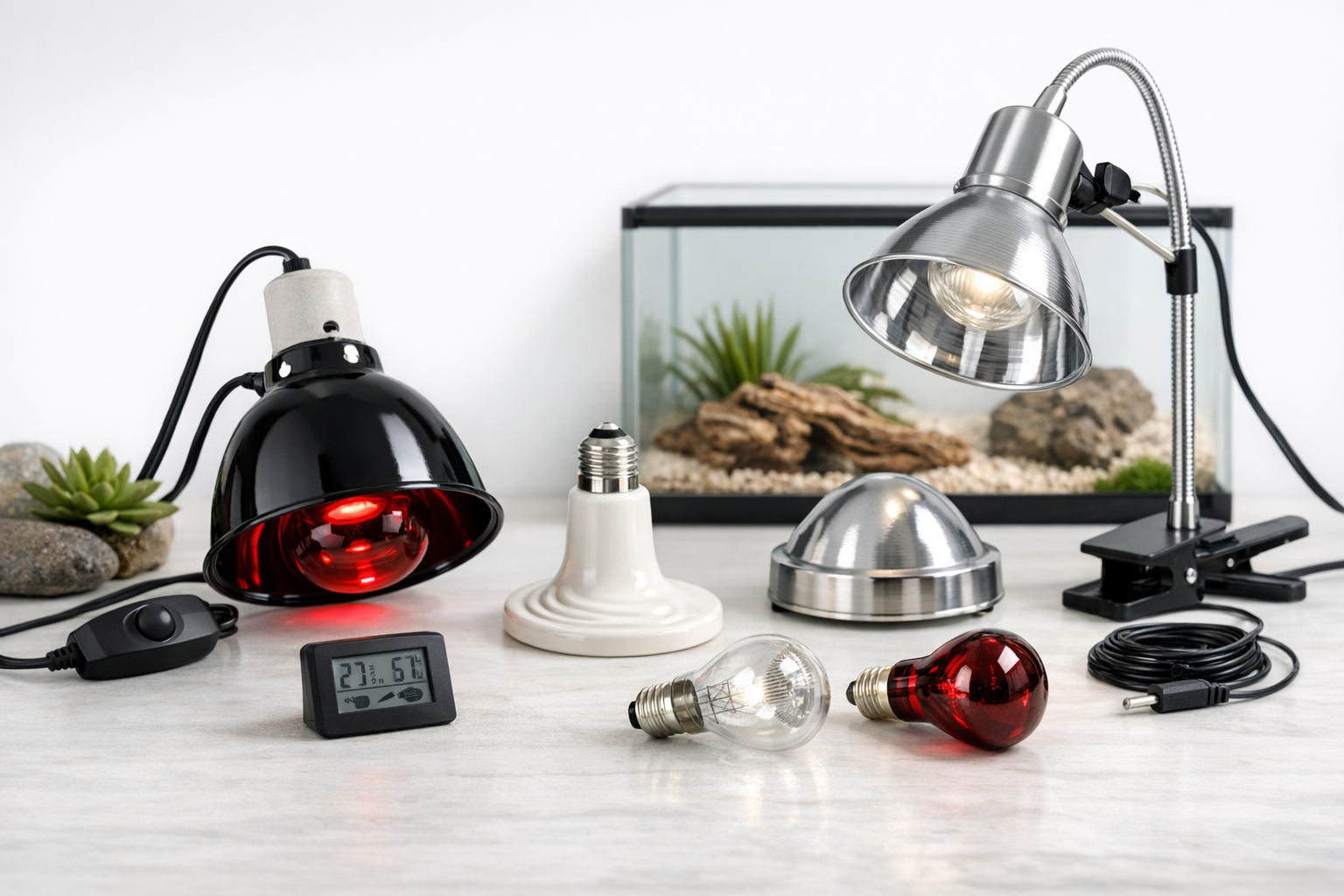
For decades, reptile keepers leaned on basic incandescents to create a basking spot. That old-school approach worked—crudely. It created heat but not necessarily a safe beam pattern or an efficient energy profile. As our understanding of reptile biology matured, so did the tech. Halogen floods arrived, offering a broader beam and “punchier” heat that mimics the sun’s intensity at the spot where a reptile basks.
Meanwhile, ceramic heat emitters (CHE) showed up as the go-to for heat without visible light—handy for nocturnal species and for maintaining ambient warmth overnight without disrupting the day/night cycle. Deep heat projectors (DHP) are the relative newcomers. They focus more of their output into longer infrared wavelengths (A/B) that penetrate tissues a bit deeper than the very surface-only heat of some bulbs, promoting a more natural warm-through feel when used correctly.
Mercury vapor bulbs tried to be the all-in-one solution (UVB + heat), but the combo approach can be tricky. If you need to raise or lower heat, you might end up messing with your UVB placement and dose. Many keepers now separate tasks: a quality UVB tube for ultraviolet and a heat source for basking. That modular approach makes fine-tuning easier, safer, and more consistent.
Legislation and efficiency trends have also nudged the market. While some incandescent options have waned, halogen floods and specialty reptile emitters remain available, and purpose-built fixtures and thermostats have gotten much better. In 2026, a well-designed system looks like this: a bright, full-spectrum visible light for daylight ambiance, a correct UVB tube for species needs, and a measured, well-placed heat source for basking. One job per device, tuned to perfection.
Appearance for Reptile Heat Lamps
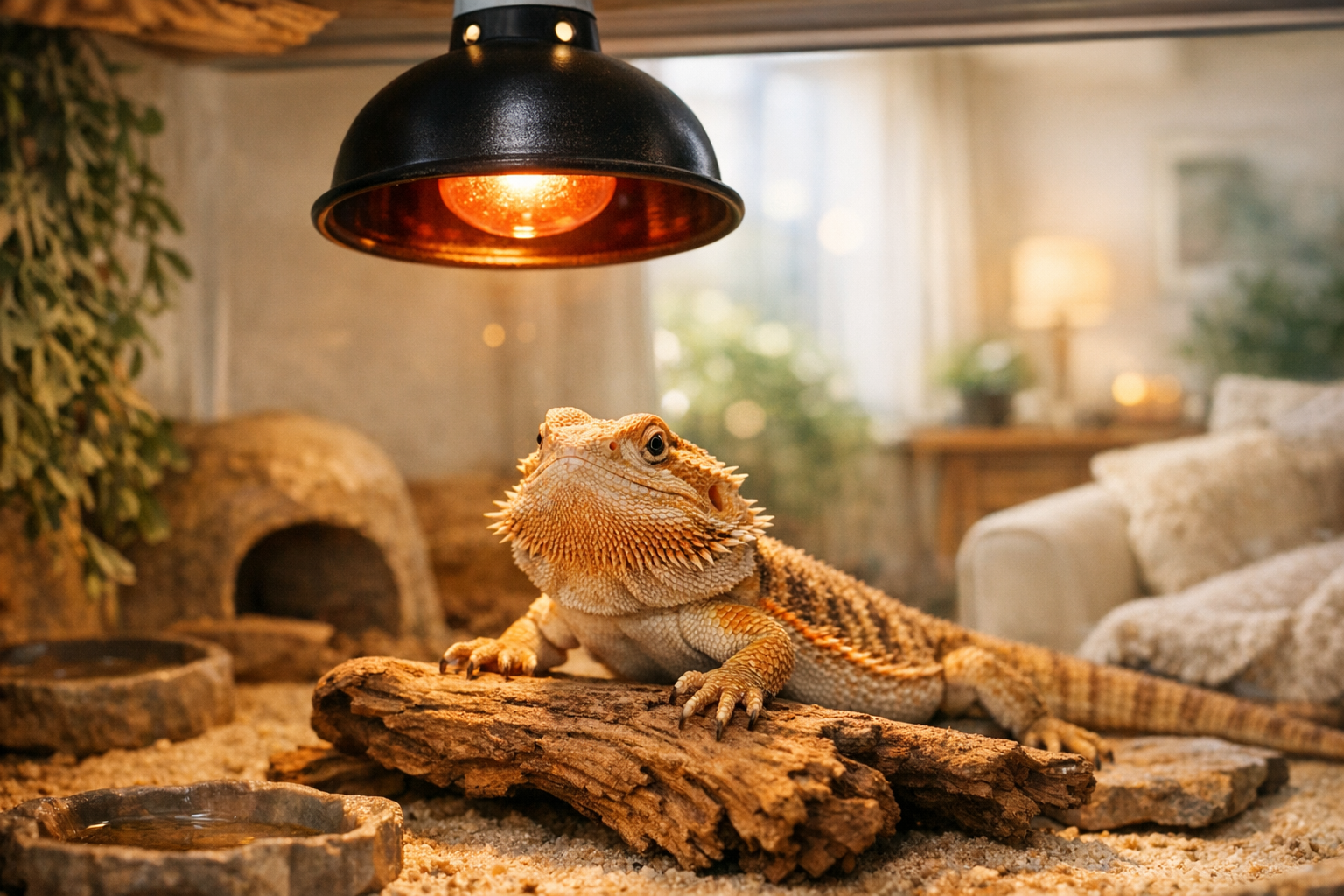
Heat lamps look simple from the outside—bulb goes in, switch goes on—but their “appearance” should be thought of as the footprint they cast inside your enclosure. Key variables include beam width, color of visible light (if any), and how that beam interacts with your décor and basking perch.
- Halogen floods: Often BR30 or PAR38 shapes with a frosted face. A flood beam spreads heat evenly over a basking platform, reducing hot spots and helping the reptile warm safely across the shoulders and back.
- CHE (ceramic heat emitters): Solid ceramic discs or coils that glow faintly at most when first heated but produce no visible light. Great for nighttime heat or species that don’t need bright basking lamps.
- DHP (deep heat projectors): Usually look like small, heavy bulbs with a thick lens. They emit little to no visible light but deliver a focused, penetrating warmth that can be very effective at moderate distances.
- MVB (mercury vapor bulbs): Bulky, heavy bulbs that emit heat, UVA, and UVB. They run hot, require strong fixtures, and must be positioned carefully to avoid overexposure to UVB at close range.
Also consider the “look” of your basking area under the lamp. Bright, daylight-toned white light (not red or blue) is better for diurnal reptiles. High color-rendering visible lighting (separate from the heat bulb) makes your habitat look natural and helps your reptile see their world clearly. If you want visibility at night, use room ambient light briefly and then return to darkness—no colored bulbs needed.
Temperament and personality for Reptile Heat Lamps
We’ll be playful here: if heat lamps had personalities, halogens would be the exuberant morning people—brilliant, focused, and ready to warm a basking rock fast. CHE are the steady introverts, humming quietly in the background with no visible light. DHP are the thoughtful types, not flashy but delivering a deep, calm warmth. MVB are charismatic multitaskers—great if used well, but a handful to manage.
Your reptiles have “temperaments,” too, under heat. When the basking spot is right, you see confident postures: a bearded dragon pancaking happily under a lamp; a colubrid snake draping across a heated branch after a meal; a uromastyx parking like a solar panel in the brightest zone. When the gradient is wrong, you see avoidance, gaping, hyperactivity to escape heat, or constant hunkering in the cool end. Good heating is less about a number on a box and more about how your animal uses the space you’ve made.
Exercise and activity needs for Reptile Heat Lamps
Heat drives activity. In nature, reptiles move through microclimates—warming up in a sunpatch, cooling under scrub, basking on a ledge—so your enclosure should encourage similar movement. Place the basking spot at one end and build a clear gradient to the opposite side. Use branches, cork, platforms, and hides at various heights and distances from the lamp to create warm, warmer, and coolest paths.
- Horizontal enclosures: Put the heat on one side, hides on each end, and a mid-zone perch so the animal can choose “just right.”
- Vertical enclosures: Place the heat source high and offer basking shelves at multiple heights with safe access. Chameleons and arboreal geckos should be able to bask and retreat quickly.
- Photoperiod: Aim for 10–14 hours of light, depending on species and season. Darkness should be predictable at night for proper rest.
- Seasonal adjustments: Many species benefit from subtle seasonal shifts in intensity and day length. Feedings and breeding cues often sync to those changes.
Done right, your animal will “use the room”—warming up to start the day, exploring when comfortable, and settling into cool hides when it’s time to rest. If they aren’t moving, reassess the gradient and habitat complexity. Read more: Complete Guide to the Sphynx Cat: Personality, Care & Tips
Training and socialization tips for Reptile Heat Lamps
Heat lamps can make or break your husbandry training. Animals learn routines: lights on, bask, explore, feed, digest. Use that predictability.
- Target feeding near, not under, the hot spot: Let the reptile warm first, then feed just off the basking center. This supports digestion without creating a “jump at the lamp” association.
- Gradual changes only: When introducing a stronger bulb or moving a lamp, increase intensity in small steps to avoid stress. A simple in-line dimmer helps immensely. Consider an Plug-in dimmer switch for halogens.
- Thermostat discipline: Nighttime heating without visible light should be on a reliable thermostat. Proportional controllers reduce swings. An Proportional thermostat is a smart upgrade.
- Handling timing: Avoid handling immediately after meals when the reptile is basking hard to digest. Let them complete their heat “session.”
- Positive association: Pair bask-time with low-stress care: quick spot checks, misting for species that need it, brief visual inspections—never prolonged disruptions under the lamp.
Grooming and shedding for Reptile Heat Lamps
Reptiles don’t need a bath in the human sense, but they do need the right combo of heat and humidity to shed cleanly. Heat lamps influence this more than you might think.
- Heat supports hydration cycles: Proper warmth encourages drinking and normal skin turnover. Too cool and the animal may struggle to hydrate; too hot and you promote dehydration, especially without adequate ambient humidity.
- Humidity strategy: Pair your basking zone with a humid hide on the warm side for species that require it. Monitor humidity with a reliable gauge—an Digital hygrometer is worth it.
- Night heat + moisture: If you need warmth overnight, use CHE or DHP on a thermostat. Avoid lighted bulbs at night; they can dry the air and disrupt rest.
- Shedding aids: For stubborn sheds, offer a damp hide (sphagnum moss lightly moistened) and review temps. Consider an Reptile humid hide box rather than risky “soaks” unless species-appropriate.
- Burn prevention: Bulbs and fixtures get blisteringly hot. Install lamp guards and ensure there’s no way your animal can press against metal mesh or bulb faces while climbing.
Health concerns and lifespan for Reptile Heat Lamps
Good heating reduces health problems; bad heating often causes them.
- Thermal burns: The number-one risk with poorly protected lamps. Use guards, proper distances, and sturdy mounting. Check basking perches: if they shift, your distance changes.
- Dehydration: Overly hot, dry setups lead to stuck shed, kidney stress, and lethargy. Balance warmth with appropriate humidity and water access.
- Eye strain and sleep disruption: Avoid colored “night” bulbs. Bright, quality daylight during the day; true darkness at night.
- Digestive issues: Too-cool basking spots can slow digestion, cause regurgitation, or invite gut problems. Post-feeding access to correct heat is essential.
- UVB confusion with combo bulbs: MVB can work, but the UVB dose is tied to heat placement; it’s easy to “fix” heat and accidentally overdose UVB (or vice versa). Separate UVB and heat unless you’re very comfortable with meters and distances.
- Equipment failure: Bulbs fail, thermostats misread, and fixtures fatigue. Use redundant thermometers, test gear monthly, and log temps over time. Replace cracked or flickering bulbs immediately.
As for equipment lifespan, halogen floods commonly run several months of daily use; CHE and DHP can last a year or more. Thermostats, guards, and fixtures can last years with careful use. Your reptile’s lifespan benefits directly from the steady, predictable comfort a correctly managed heat system provides.
Diet and nutrition
What does heat have to do with diet? Everything. Reptiles are ectotherms; they rely on external heat to power digestion and metabolism. Even the best feeding plan fails if the basking site isn’t right.
- Time meals with warmth: Feed during the active phase of the day, when basking lamps are on and the animal can thermo-up before and after eating.
- Supplement synergy: UVB, calcium, and heat work together. If your species needs UVB, pair appropriate UVB lighting with calcium and vitamins tailored to the schedule. Consider Calcium + D3 powder for limited-UVB setups or Vitamin-only powder if UVB provision is robust.
- Hydration with heat: Slightly warmer ambient temps can increase evaporation. Ensure fresh water and species-appropriate humidity, especially for insectivores and arboreal species.
- Post-feeding basking: A stable 2–4 hour window of access to the hot spot supports digestion. If your animal hides immediately, the gradient may be too intense; adjust distance or dim slightly.
- Verify, don’t guess: Use an Infrared thermometer gun to measure the basking surface—your animal’s belly is what matters, not just the air around it.
- Feeder nutrition: For insectivores, gut-load feeders properly. A healthy basking cycle helps them use the nutrients you provide, especially calcium.
Best Products for This Breed
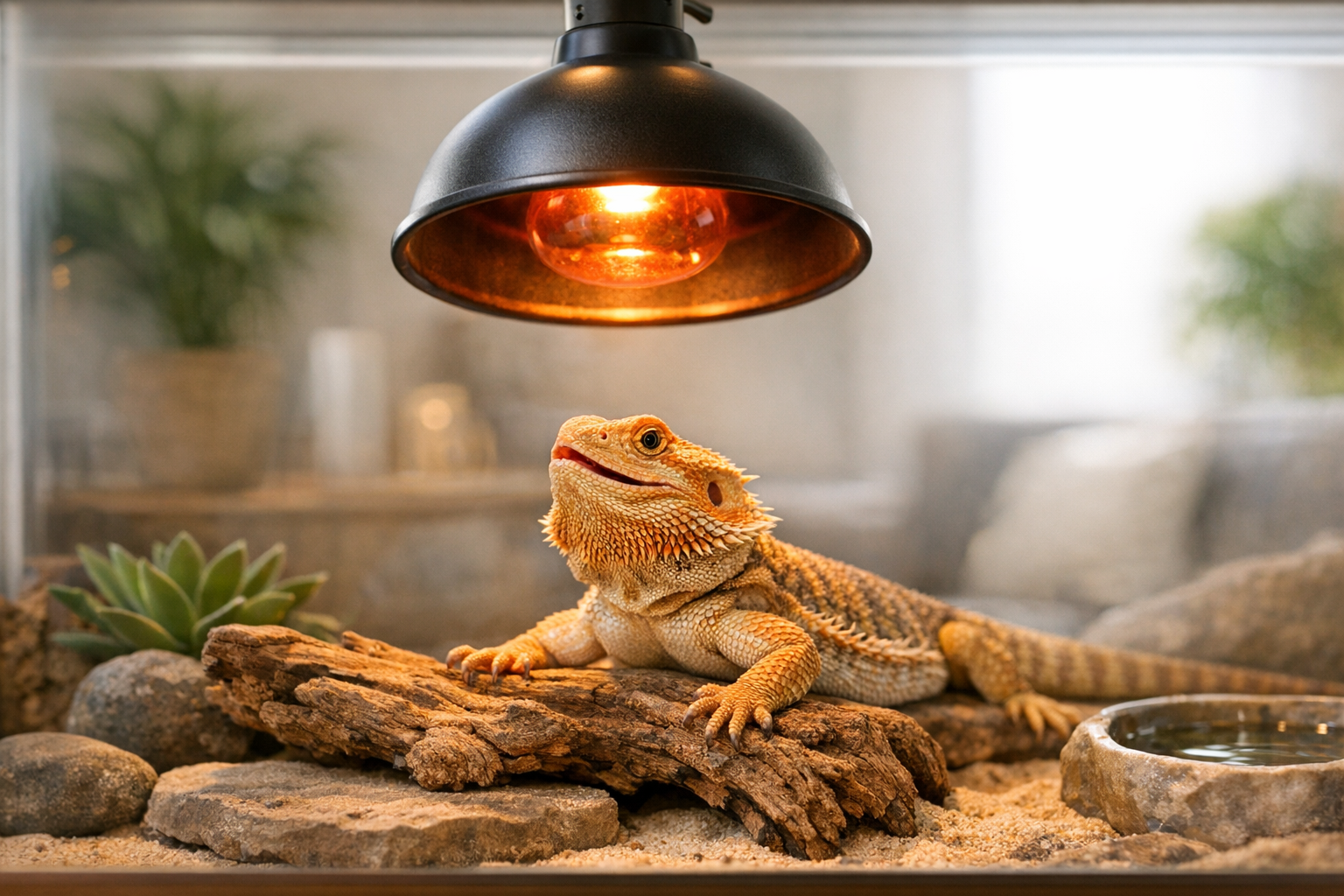
We tested and compared what actually works in real enclosures. A quick note on wattage: bigger tanks, taller mounts, and cooler rooms need higher wattage. Always start high (farther from the perch), measure, and adjust down.
Our picks for the best reptile heat lamps in 2026
- Best halogen basking flood (overall): Arcadia Halogen Basking Flood
- — Clean, bright heat with a true flood pattern that warms animals evenly. Pairs perfectly with a separate UVB tube. Choose 50–100W and fine-tune with a dimmer.
- — A household-style flood that performs like a champ in reptile use. Durable and easy to source. Beam is wide, so it’s kinder to new keepers learning distances.
- — Reliable, long-lived, and silent. Use with a thermostat; watch enclosure humidity as CHE can dry the air.
- — Delivers a penetrating warmth some species use beautifully. Excellent for night or day supplemental heat without light.
- — Great UVB and heat in one. Demands careful distance management and a high-quality fixture. We still recommend separate UVB + heat for most keepers.
- — High-heat-rated ceramic socket with a reflective interior. Simple, safe, and compatible with guards.
- — Height adjustment makes tuning a breeze; guards prevent accidental contact burns.
- — Measure basking surface and track gradients continuously.
Sizing tips by enclosure type:
- 20–40 gallon terrestrial: Start with 50–75W halogen flood 8–12″ above basking platform. Adjust via dimmer or distance.
- Large terrestrial (75–120+ gallons): 90–150W halogen flood or two smaller floods spaced for even coverage. Consider CHE/DHP overnight on thermostat if room runs cool.
- Vertical/arboreal (2–4′ tall): Position halogen flood overhead with a basking branch/shelf 10–14″ below. Use guards. Chameleons and arboreal geckos benefit from quick retreat routes.
- Tortoise tables: Wide flood over a slate tile basking zone to create belly heat. Consider a secondary ambient heater if room temperatures are low.
Spot vs flood: Choose floods for most setups. Spots can create intense pinpoints that risk burns unless you are very precise with distance and perch stability.
Night strategies: If nighttime temps dip below species minimum, use CHE or DHP on a thermostat set a few degrees under daytime ambient. No visible light at night.
Is This Breed Right for You?
Before you commit to any heat lamp setup, ask yourself: Read more: Complete Guide to the Golden Retriever: Temperament, Care & Tips
- Can you measure precisely? You’ll need an IR gun and at least one accurate digital thermometer to dial basking surfaces, warm side, and cool side.
- Will you adjust seasonally? Room temps change. Your setup needs flexible mounting or dimming to compensate.
- Is your species a basker? Diurnal baskers thrive with halogen floods and bright daylight. Nocturnal species usually need heat without light after dark.
- Do you have safe mounting options? If you can’t securely position and guard a lamp, consider alternative heating methods or different enclosure designs.
- Are you comfortable separating jobs? The easiest path in 2026 is separate UVB and heat sources. Combo bulbs are best left to experienced keepers with UV meters.
If that list feels doable, you’re ready to choose a lamp that gives your reptile the sun they deserve—reliably, safely, and on a schedule that matches their biology.
FAQ
What wattage heat lamp do I need for my reptile?
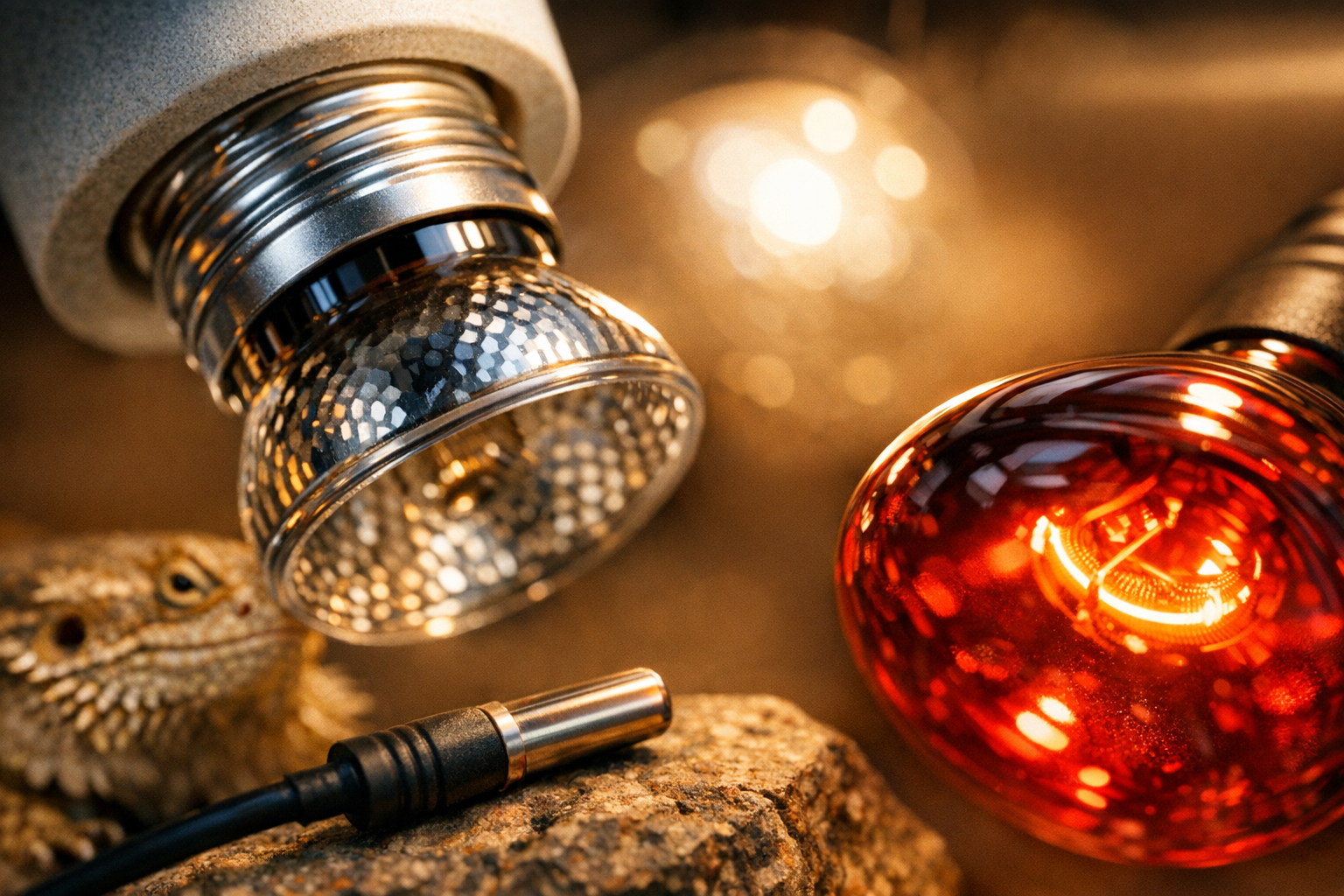
There’s no one-size-fits-all answer. It depends on enclosure size, lamp distance, room temperature, and the basking temperature your species needs. Start with a moderate halogen flood (50–90W for small to mid enclosures) mounted 8–14″ from the basking surface. Measure the surface temperature, then either raise/lower the lamp or use a dimmer to hit the target. Always verify with an IR thermometer gun.
Can I keep a heat lamp on all night?
Visible light should be off at night to protect circadian rhythm. If you need overnight warmth, use a CHE or DHP on a thermostat. Aim for a nighttime ambient a few degrees cooler than day temps unless your species requires otherwise. Avoid red or blue “night” bulbs—reptiles can perceive them and they disrupt rest.
Are red or blue bulbs okay for reptiles?
No. Colored bulbs marketed for “night viewing” can cause eye strain, stress, and sleep disruption. Provide bright, white daylight during the day and true darkness at night. For nocturnal heat, use CHE or DHP.
How long do heat bulbs last?
Halogen floods often last 3–9 months of daily cycling; CHE and DHP can last a year or more. Replace any bulb that flickers, dims noticeably, or shows cracks. Keep a spare on hand to avoid sudden losses of heat.
Heat mat vs heat lamp—which is better?
For diurnal baskers, overhead heat is more natural—it warms the top of the animal and the basking surface like the sun. Heat mats can supplement belly heat for some species, but they should always be used with a thermostat and careful placement. Many keepers use a mix: halogen for daytime basking and CHE/DHP or a controlled mat for nighttime ambient warmth.
Can heat lamps cause fires?
Any high-wattage device can be risky if misused. Prevent problems by using ceramic-socket fixtures rated above the bulb’s wattage, securing lamps on a stable stand, installing guards so nothing touches the bulb, keeping cords tidy, and maintaining clear space above and around the fixture. Test run new setups before adding animals.
Do I still need UVB if I have a heat lamp?
Yes—unless you use a mercury vapor bulb that provides UVB and you’ve confirmed correct distance and dose with a UV meter. Most keepers achieve better results by separating UVB (with a dedicated tube) and heat (with halogen/CHE/DHP). Heat alone cannot replace UVB where it’s required.
Putting it all together: the best reptile heat lamps in 2026 are the ones that let you build a safe, measured gradient that your reptile actually uses. Pick a flood for most baskers, keep nights dark with heat-only options, and control everything with reliable fixtures and thermostats. Then stand back and watch your scaly friend do exactly what nature designed them to do—soak up the sun, on their terms.
Conclusion: Choosing the best reptile heat lamps in 2026 isn’t about brand hype; it’s about matching lamp type and beam to your species and enclosure, separating UVB from heat (when possible), and measuring until your basking surface is perfect. With a good halogen flood, a thermostat-controlled night heater (if needed), and a little nerdy diligence, your reptile gets a safe, sunny microclimate every day of the year.